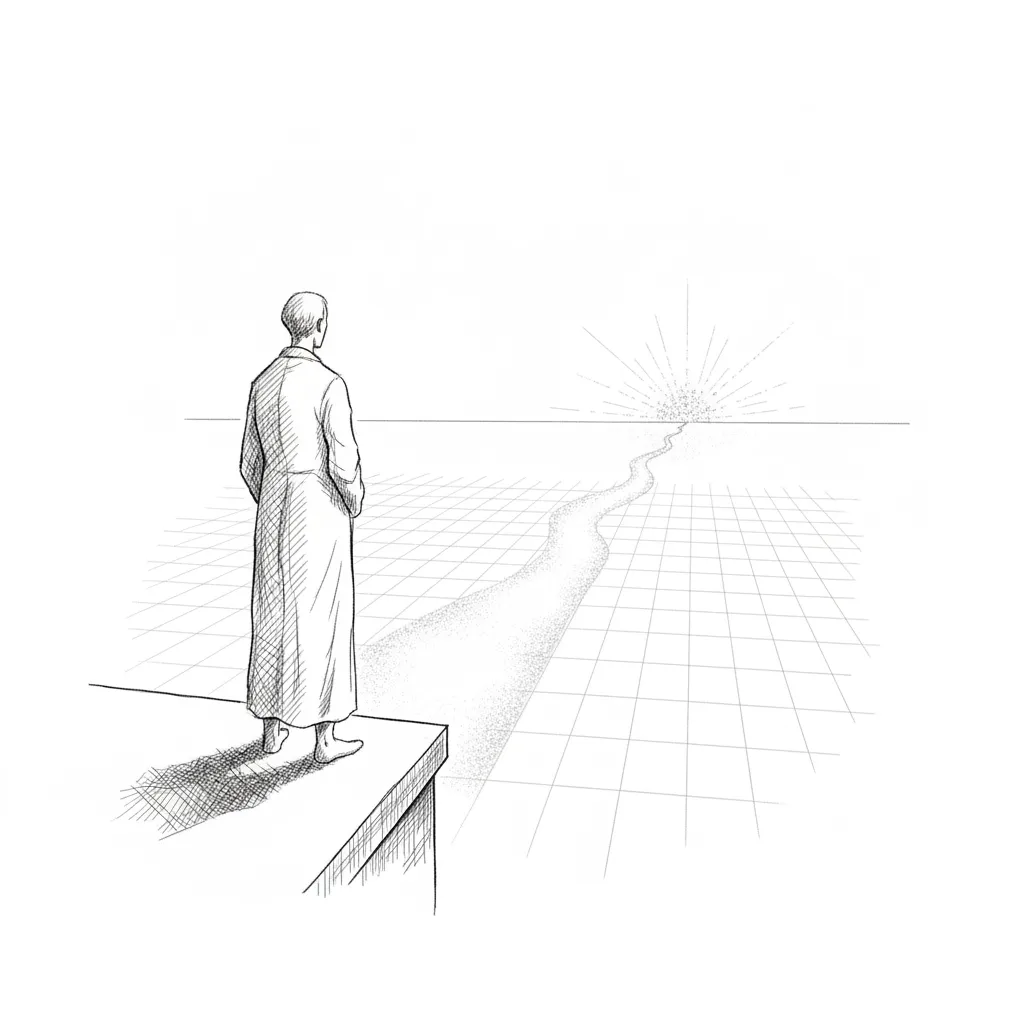
When people set long-term goals, the idea of financial freedom seems to always come up.
I’ve been through different stages of my own relationship with money and the future.
The first stage was simple: I wanted to maximize my EV.
I was already playing high-stakes poker when I was twenty. And my Dad used to beg me each year to just take 10% of my income and put it in the market and forget about it. I thought he was foolish.
10%? What’s the point? I earn much more than that with this money in my bankroll!
This mindset of EV-maximization led me from ultra-high-stakes poker to high-stakes business investments to a whole lot of risk (and, on the business side, loss).
From there, after being fortunate to land more or less on my feet, I still felt behind. Behind what? I don’t know. Behind where I “should” have been. If only I’d made a few decisions differently, I’d be “there.”
So my second stage was that – feeling behind and rushed. Rushing towards “there,” aka financial freedom.
To stage-two-me, financial freedom meant retirement. It meant I’d never have to work another day in my life.
(Of course, that retirement target depends entirely on what you want to be able to spend each year – a topic for another day!)
In some ways, like stage one, this led to thinking big – looking for home runs. Though I’d learned my lesson about taking on too much risk, I still didn’t appreciate the small wins. I didn’t appreciate the value of saving an extra 10% of my income each year. That wouldn’t get me there fast enough, so what’s the point? I’d need to triple my income instead.
Most people I’ve worked with have this mindset. They want to reach retirement-level financial freedom while they’re young. One thing that I’ve found most helpful about coaching is that I tend to attract people who are like me. And when I talk them through decisions about their lives and careers, it sometimes helps me realize something true about myself.
This brings me to stage three.
What I realized is that when I reach true retirement-level financial freedom, it won’t change very much. I’m not going to stop working on things, challenging myself, and trying to grow.
I know there are people out there who would love to never have to work and spend their days on a beach. Those people tend to not show up in coaching conversations with me, but I know they exist somewhere. It sounds miserable to me, personally.
So if I’m not going to retire, what’s the point of retirement-level financial freedom? And why do I need to get there so fast?
In poker, the fear, “what if it all goes away?” comes up as a common rebuttal. And more lately, “what if AI changes everything?” I don’t have as strong an answer to the second as the first. But the players I talk to – the ones similar to me, who will keep challenging themselves – have figured things out time and time again. I trust them to keep figuring it out, whatever the world looks like. And that’s what I tell them.
Others aren’t as fearful, but have the goal of hundreds of millions in wealth. For some, this is a game they enjoy playing. For others, a bandage over a wound. For others still, a desire to create positive change in the world. And, of course, there are combinations of the three.
For me, I’m not too fearful, I’d like to create change in a different way, and my wounds can be covered with cheaper bandages. So I found my way back to the question I posed earlier: Why the rush?
I didn’t have a good answer, which is why I changed my personal definition of financial freedom from retirement-level to: The freedom to work on what I want to work on, when I want to, with people I enjoy working with.
There are numbers I have in mind associated with that – savings and income numbers – but practically speaking, I’m fortunate to say I’m quite close.
I realize not every reader has that luxury, but the bottom line may still apply:
To achieve my financial dreams, I went from needing several very successful years of hard work to needing almost nothing, and all I did was change my perspective.
And with that perspective shift away from the rushing and feeling behind, I now value the “smaller” but meaningful, responsible things. Saving a little bit more of my income. Being mindful about where my money sits.
And doing what many others do around the age of 40 – realizing that my parents knew something 20-year-old me didn’t.
– Phil