When I was twelve or so, the Burger King at the intersection we’d pass every day ran a promotion: Free FryDay. (it was on a Friday)
They’d just launched their new and improved fry recipe, and they wanted to show it off. You could go get a free order of small fries, even if you didn’t order anything else.
We drove past it on the way home from school that day. The line was longer than I’d ever seen it – much longer. The promotion was working, I guess.
But was it working for the people in line – The Free Fryers?
They were waiting forty-five minutes to get a free food item worth $1.
I was old enough to understand that $1 had different value to different people – that some out there were struggling. But I also knew that they were waiting in line for about $1.33/hour, significantly less than minimum wage.
I hadn’t entered the workforce and gotten a job yet, but I couldn’t imagine a job getting much worse than waiting in line. I didn’t understand why they’d do it.
I later learned there was a name for this concept: Opportunity Cost.
Every time you make a decision, you don’t weigh the choice against nothing. You weigh it against the alternatives.
At the poker table, we “know” this, but don’t always keep it in mind. We make a “+EV” semibluff on the turn, not acknowledging that checking back and realizing our equity is also +EV when we compare it to losing the pot (the default comparison).
Not to mention that our river bluff once they check again might be higher EV than the turn bluff. And that we earn additional EV when we complete our draw and bet or raise the river – though that cuts both ways, benefiting us after either a turn bet or a turn check.
If you didn’t “know” that like I do, consider yourself lucky that you’re learning it with the right framing in mind. Maybe you won’t make the same EV-calculation-driven mistakes that I used to.
My Tournament Life
My poker career didn’t involve MTTs. I’ve always preferred cash games by a mile. On the rare occasion I played a tournament, I didn’t treat it as part of my job. It was for fun, or for glory. Spread over the last two decades, I have played in a number of them, usually at the WSOP.
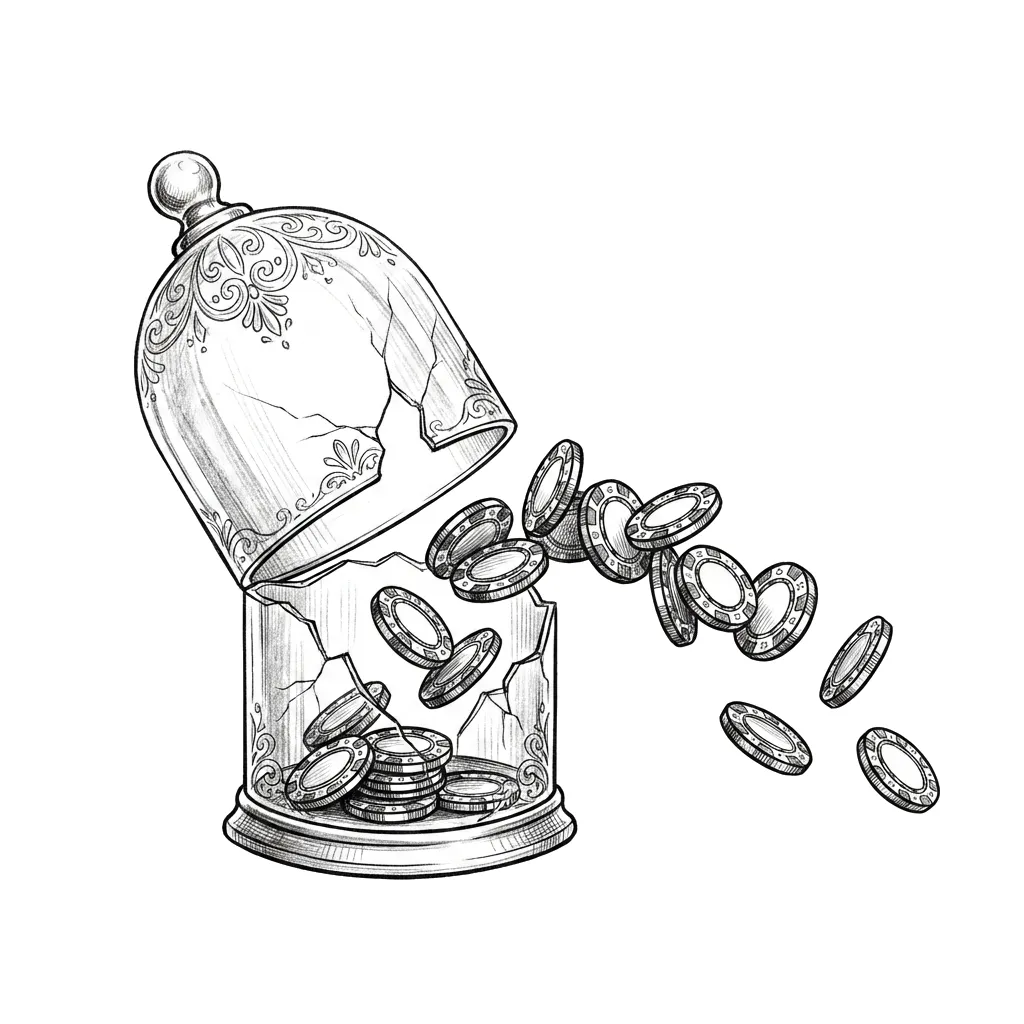
I think there’s a natural bias towards preserving your tournament life in most every human. Getting stacked in a cash game is losing money. Busting out of a tournament is more like death in a video game.
On top of that, there are rational reasons to want to hang on to your tournament life.
I have a big edge over the field. Why take a risk now and potentially miss out on exploiting that edge? I’ll find a better spot.
And there’s math to back up the idea that preserving a tournament life is +EV. The Independent Chip Model (ICM) is an imperfect but useful way of translating your stack into real-money equity. Run the risk-reward numbers and the result is clear: the chips you can win are worth less than the chips you stand to lose. Due to the way MTT payouts are structured, chips have diminishing returns as your stack grows.
But these models don’t calculate the alternative. +EV compared to what? Compared to busting the tournament and then hiding in a hole until the next day? Compared to eating an entire medium pizza and lying in bed for sixteen hours?
No idea where that image even came from.
My Cash Life
Once I was playing higher stakes cash games, it occurred to me just how much I was costing myself playing tournaments, and it freed me to take on more risks when I played them. When there’s a game down the street that I can earn $1500/hr playing, the tournament-life math during the first 95% of a $5k MTT doesn’t really apply. My tournament life isn’t an asset to protect. It’s more of a liability.
Now, not everyone can earn a lot in cash games (and those readily available $1500/hour games don’t exist nowadays). Plus, if I were purely EV-focused, I’d have never played the tournaments in the first place.
But the numbers still can be compelling at lower hourly rates. Not to mention the life EV of meeting up with friends or relaxing at home.
So, as we approach the end of the WSOP, when players are tilted and trying to get even, keep in mind that your life doesn’t end with your tournament life. Nor does your day.
I’m not suggesting you shove your stack in with the worst of it just so you can go home. Just try, at least in the early stages, to accumulate as many chips as you can while making good plays, knowing that if you’re gently removed from the tournament, there is something else of value you can do.
Your chips aren’t your life. They don’t belong in a vault – they belong in the fight. Good luck out there.